
The Best Snorkeling Spots in Guanacaste, Costa Rica — A Local Guide from the Mowana Crew
- Laurent Rives
- 4 days ago
- 7 min read

If you've ever wondered where to find the most stunning underwater scenery in Guanacaste, you're in the right place. After more than 30 years sailing these waters, our captain Jean-Luc knows every reef, every bay, and every hidden cove along Costa Rica's Gold Coast. This is not a tourist brochure — it's the honest, firsthand guide we share with our guests before every departure.
Whether you're planning a family trip, a romantic getaway, or an adventure with friends, snorkeling in Guanacaste is an experience unlike anywhere else in the world. And the best way to reach the most spectacular spots? Aboard a private trimaran, away from the crowds.

Why Guanacaste Is One of the Best Snorkeling Destinations in Central America
Guanacaste sits on Costa Rica's northwestern Pacific coast, where warm, calm waters meet an extraordinary diversity of marine life. The dry season (November to April) brings crystal-clear visibility — sometimes up to 20 meters — while the green season (May to October) brings nutrient-rich waters that attract larger marine animals like sea turtles, manta rays, and whale sharks.
Unlike the Caribbean side of Costa Rica, Guanacaste's Pacific reefs are wilder, less visited, and more diverse. You won't find the same reef here twice — each bay has its own ecosystem, its own population of fish, its own personality.
The key to unlocking the best snorkeling in Guanacaste is simple: you need a boat. Most of the top spots are inaccessible by land, hidden behind rocky headlands or tucked inside protected bays that can only be reached from the water. That's where our private sailing tours from Playa Flamingo come in.
The Top Snorkeling Spots Along the Gold Coast
1. Playa del Amor (Beach of Love)
Hidden behind a rocky point south of Playa Flamingo, Playa del Amor is one of our favorite stops on the Mowana. This secluded beach is only accessible by boat — no road, no path, no crowds. The reef just offshore teems with parrotfish, angelfish, sea urchins, and the occasional octopus hiding between the rocks.
The water here is typically calm and clear, making it perfect for families with children or first-time snorkelers. We anchor the Mowana just off the beach, set up the snorkel gear, and let our guests explore at their own pace while Jean-Luc keeps a watchful eye from the deck.
Best time to visit: Morning, when the light penetrates the water and visibility is at its peak. Our Half Day Morning tour departs at 8:30 AM and typically includes a stop here.
2. Las Catalinas
The Las Catalinas archipelago, located just north of Playa Flamingo, is arguably the crown jewel of snorkeling in Guanacaste. These small rocky islands rise dramatically from the Pacific, surrounded by reefs that support an incredible diversity of marine life.
Here you'll find white-tip reef sharks resting on the sandy bottom — completely harmless and utterly mesmerizing. Giant puffer fish drift lazily between the rocks. Schools of jack fish swirl in synchronized formations above your head. Moray eels peek out from crevices in the reef. If you're lucky, a sea turtle might glide past within arm's reach.
The currents around Las Catalinas can be stronger than in the sheltered bays, so this spot is best suited for confident swimmers. Our crew always assesses conditions before anchoring — your safety is our first priority.
What you might see: white-tip reef sharks, sea turtles, moray eels, puffer fish, jack fish, manta rays (seasonal), eagle rays.
3. Islas Murciélago (Bat Islands)
For the more adventurous snorkelers in your group, the Bat Islands — located further north in the Santa Rosa National Park — offer some of the most dramatic underwater scenery in all of Costa Rica. These remote islands are named for the thousands of bats that roost in their caves, but the real attraction is below the surface.
The Bat Islands are famous for bull shark sightings, particularly between May and November when the warmer, nutrient-rich waters bring them close to shore. While swimming with bull sharks is strictly for experienced divers, snorkeling around the edges of the islands offers extraordinary encounters with rays, large schools of fish, and spectacular coral formations.
This destination is included on our Full Day sailing tour, which gives us enough time to make the journey north, explore the islands, and sail back to Flamingo at sunset.
4. Playa Danta and the Las Catalinas Village Reefs
Just south of the Las Catalinas archipelago lies Playa Danta, a pristine beach fronted by healthy coral gardens in just 3 to 5 meters of water. This makes it one of the most accessible snorkeling spots for all levels — the shallow depth means excellent light penetration and easy visibility of the reef below.
The coral here is remarkably intact compared to many Caribbean and Pacific reefs — a testament to the low boat traffic and the protection afforded by the private Las Catalinas community that borders the beach. Parrotfish, triggerfish, and sergeant majors are permanent residents. In the rainy season, the occasional sea turtle comes to feed on the sea grass nearby.
5. Playa Flamingo Reef
Don't overlook the reef right here in Playa Flamingo — it's literally steps from where the Mowana departs each morning. The reef runs along the southern headland of Flamingo Bay and is home to a surprisingly active community of marine life, including colorful nudibranchs, stingrays resting in the sand, and large schools of blue-striped grunt fish.
This is the spot we use for guests who want to dip their toes in before heading to more remote locations, and for children experiencing snorkeling for the first time. The calm, protected waters of the bay make it ideal for beginners.
What Marine Life Can You Expect to See?
Guanacaste's Pacific waters are extraordinarily rich in biodiversity. Depending on the season and the spot, here is what you might encounter on a private sailing tour from Playa Flamingo :
Year-round:
Parrotfish, angelfish, triggerfish, puffer fish
Moray eels and white-tip reef sharks
Sea urchins, starfish, and nudibranchs
Stingrays and electric rays
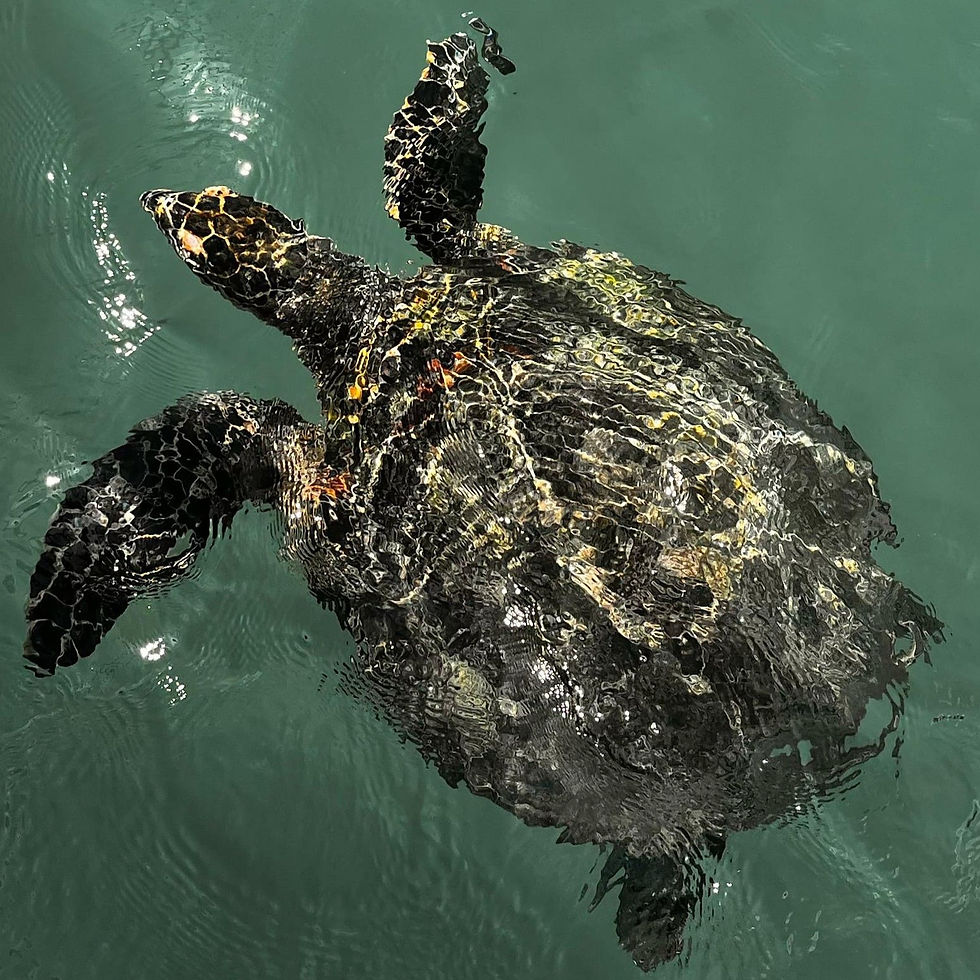
Hawksbill and green sea turtles
Seasonal (May to November — green season):
Humpback whales (July to October — heard underwater, occasionally seen)
Whale sharks (sporadic, mostly August to October)
Manta rays and eagle rays
Dolphins — spinner and bottlenose — often ride the bow of the Mowana year-round
The honest truth: no two days on the water are the same. Some mornings the ocean is alive with activity and you can't look anywhere without seeing something extraordinary. Other days are quieter. That's the wild Pacific — and it's part of what makes it so special.
Tips for Snorkeling in Guanacaste
After thousands of hours on the water with guests of all ages and experience levels, our crew has gathered a few practical tips to make the most of your snorkeling experience :
1. Go early.
The morning hours offer the best visibility and the calmest conditions. Wind typically picks up in the afternoon along the Guanacaste coast, which can reduce clarity. Our Half Day Morning tour takes full advantage of the golden hours before midday.
2. Don't touch the reef.
This seems obvious but bears repeating — even a light touch can damage coral that took decades to grow and disrupt the delicate ecosystem. Keep your fins off the bottom and resist the temptation to pick up sea creatures.
3. Wear reef-safe sunscreen.
Standard sunscreens contain chemicals that bleach and kill coral. On the Mowana, we only allow reef-safe sunscreen — we provide it on board, so you don't need to bring your own.
4. Snorkel with a buddy.
We always pair guests and ask everyone to stay within sight of a crew member. The ocean is magnificent but it deserves respect.
5. Let the current help you.
In spots with a gentle current, it's much more enjoyable to drift with it rather than fight it. Our crew will position the Mowana so you can drift along the reef and we'll pick you up at the other end.
6. Bring an underwater camera.
The memories you'll make underwater in Guanacaste deserve to be captured. A simple GoPro or even a waterproof phone case will do the job beautifully.
Why a Private Sailing Tour Is the Best Way to Snorkel in Guanacaste
The difference between snorkeling on a shared tour and snorkeling on a private trimaran is the difference between a guided museum tour and having the museum to yourself.
On a shared boat, you're on someone else's schedule. You snorkel where they tell you, for as long as they allow, alongside 30 other tourists in the water at the same time. The reef gets crowded, the fish retreat, and the magic dissipates.
On the Mowana, it's just your group. We anchor where we want, stay as long as you like, and move on when you're ready. If Jean-Luc spots a sea turtle from the deck, we follow it. If a manta ray appears on the horizon, we position the boat to give you the best possible encounter.
This is the freedom that a private sailing tour from Playa Flamingo gives you — and it's something you simply can't replicate on a shared excursion.
How to Book Your Snorkeling Adventure
The Mowana accommodates up to 12 guests per tour, keeping every experience intimate and personal. We offer three tour formats to suit your schedule :
Half Day Morning (8:30 AM – 12:30 PM) — Perfect for families and early risers who want the best conditions and the most wildlife activity.
Half Day Sunset (1:30 PM – sunset) — Ideal for couples and groups who want a relaxed afternoon on the water followed by a spectacular Pacific sunset.
Full Day (11:30 AM – sunset) — The complete Mowana experience, with time to reach the more remote snorkeling spots like Las Catalinas and Islas Murciélago.
All tours depart from Playa Flamingo, directly in front of the PLEAMAR restaurant. Everything is included : snorkeling gear, paddleboards, unlimited drinks, and a freshly prepared Costa Rican BBQ meal on board.
Reserve your private sailing tour and we'll take care of the rest.
A Final Word from the Captain
"I've been sailing these waters for over 30 years, and I still get excited every time we drop anchor at a new spot. The ocean around Playa Flamingo is endlessly generous — it gives you something different every single day. My job is to share that with as many people as possible, one private sailing tour at a time."
— Jean-Luc, Captain of the Mowana
Comments